
Forget Password

View News
The Legal Framework for Cybercrime Prosecution in India: Challenges and Emerging
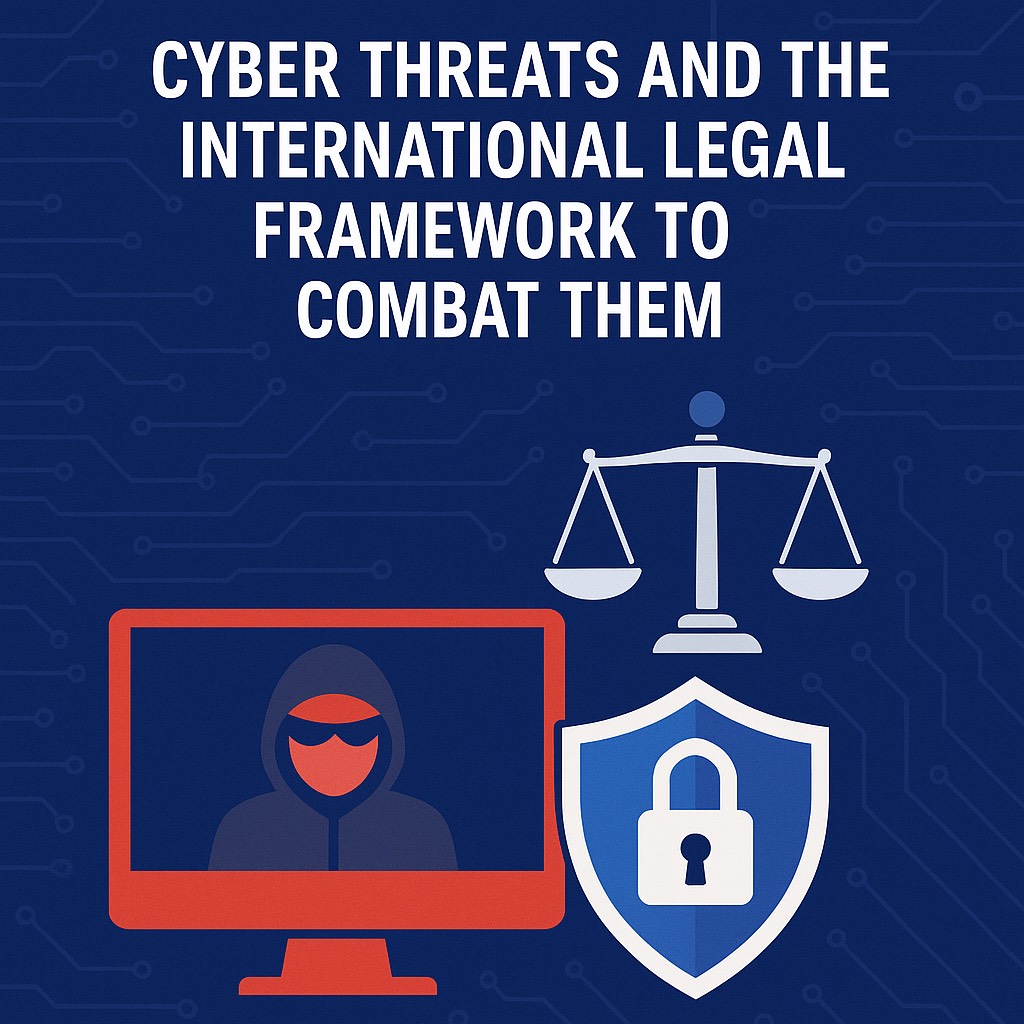
The Legal Framework for Cybercrime Prosecution in India: Challenges and Emerging Trends
Introduction
The rapid expansion of digital technologies has transformed communication, commerce, governance, and financial transactions in India. While this technological advancement has created unprecedented opportunities, it has also exposed individuals, businesses, and governmental institutions to sophisticated cyber threats. Cybercrimes such as identity theft, online fraud, ransomware attacks, data breaches, cyberstalking, and financial scams have become increasingly prevalent. In response, India has developed a comprehensive legal framework aimed at preventing, investigating, and prosecuting cyber offenses.
The effectiveness of cybercrime prosecution depends not only on substantive laws defining offenses but also on procedural mechanisms for investigation, evidence collection, and adjudication. India's legal regime combines specialized cyber legislation with provisions of general criminal law to address the evolving nature of cybercrime.
The Information Technology Act, 2000
The Information Technology Act, 2000 (IT Act) is the cornerstone of cybercrime regulation in India. The Act was passed in order to provide digital signatures and electronic transactions legal status. It also creates a framework for dealing with cybercrimes.
Certain types of cyber misbehavior are made illegal by a number of clauses of the IT Act. Unauthorized access, data downloads, virus introduction, and computer system interruption are all subject to legal responsibility under Section 43. Section 66 turns such acts into crimes with jail time and fines when they are carried out dishonestly or fraudulently.
The Act further addresses specialized cybercrimes through provisions such as:
- Section 66C: Identity theft involving unauthorized use of electronic signatures, passwords, or unique identification features.
- Section 66D: Cheating by personation through computer resources.
- Section 66E: Violation of privacy through the capture or transmission of private images.
- Section 67: Publication or transmission of obscene material in electronic form.
- Sections 67A and 67B: Punishment for transmitting sexually explicit content and child sexual abuse material.
The IT Act thus serves as the primary statutory instrument for cybercrime prosecution in India.
Integration with the Bharatiya Nyaya Sanhita, 2023
The prosecution of cybercrime is not limited to the IT Act. The Bharatiya Nyaya Sanhita, 2023 (BNS), which superseded the Indian Penal Code, 1860, also punishes traditional crimes committed using digital methods.
Online platforms are sometimes used for crimes like defamation, criminal intimidation, extortion, forgery, criminal breach of trust, and cheating. Investigators frequently use both the IT Act and pertinent BNS laws in these circumstances.
For instance, in addition to offenses under Section 66D of the IT Act, online investment scams, phishing attacks, and fraudulent e-commerce transactions may result in charges under rules pertaining to cheating. Law enforcement organizations may handle cyber-enabled crimes in a comprehensive manner thanks to this integrated strategy.
Jurisdictional Framework
Jurisdiction is one of the trickiest parts of prosecuting cybercrimes. Because cybercrimes sometimes cross national borders, choosing the right venue for an investigation and trial can be challenging.
Section 75 of the IT Act, which expands the Act's application outside India's borders, tackles this issue. The clause permits the prosecution of crimes using computer systems located in India, even if the offender is based abroad.
Indian courts have embraced broad approaches to jurisdiction where the impacts of cybercrime are seen within India as a result of their growing recognition of the global nature of cyberspace. However, global cybercrime still poses serious enforcement issues, frequently necessitating international collaboration and reciprocal legal support.
Electronic Evidence and Admissibility
The reliability and admissibility of electronic evidence play a major role in the success of cybercrime prosecutions. The main pieces of evidence in cybercrime cases are frequently emails, server logs, metadata, digital records, social media chats, and electronic documents.
The Bharatiya Sakshya Adhiniyam, 2023, which superseded the Indian Evidence Act, 1872, governs the admissibility of electronic evidence. According to the statute, electronic records are admissible as evidence as long as they meet certain requirements for integrity and authenticity.
By highlighting the significance of certification requirements for electronic records, the Supreme Court's ruling in Anvar P.V. v. P.K. Basheer considerably reinforced evidence standards. The Court then reiterated the necessity of procedural safeguards pertaining to electronic evidence in Arjun Panditrao Khotkar v. Kailash Kushanrao Gorantyal.These judgments have enhanced the credibility of digital evidence while ensuring procedural fairness during criminal trials.
Investigative Powers and Enforcement Mechanisms
Specialized investigation skills are necessary for successful prosecution. The IT Act gives law enforcement agencies a lot of authority to look into cybercrimes. Several jurisdictions have set up specialized cybercrime police stations to manage technologically challenging investigations.
The Ministry of Home Affairs' Indian Cyber Crime Coordination Centre (I4C) is essential to the coordination of cybercrime investigations, intelligence sharing, and capacity building. Online offenses, including financial fraud and crimes against women and children, can now be reported more easily thanks to the National Cyber Crime Reporting Portal.
In order to track down cybercriminals, retrieve erased data, examine network activity, and preserve electronic evidence, police enforcement organizations are also using digital forensics more and more.
Judicial Approach to Cybercrime
The necessity of strong legal responses to cyberthreats while defending constitutional rights has been repeatedly stressed by Indian courts.
The Supreme Court invalidated Section 66A of the IT Act in Shreya Singhal v. Union of India because it violated the Constitution's Article 19(1)(a) right to free speech and expression. The ruling reiterated the significance of striking a balance between cybersecurity goals and fundamental rights, even while it restricted governmental authority over online speech.
The ruling demonstrates the judiciary's dedication to maintaining cybercrime laws' constitutional compliance while successfully combating actual criminal activity.
Challenges in Cybercrime Prosecution
Cybercrime prosecution in India confronts a number of obstacles despite a rather robust legal framework. Technology is developing at a rate that frequently surpasses changes in legislation. To avoid detection, cybercriminals often take advantage of offshore infrastructure, cryptocurrency networks, anonymity tools, and encryption.
Additionally, investigative organizations struggle with a lack of qualified staff, technical know-how, and digital forensic tools. Prosecutions including cross-border aspects are made more difficult by delays in getting electronic evidence from foreign service providers.
Furthermore, there is still a severe underreporting of cybercrimes due to a lack of public understanding of cyber hygiene and reporting procedures.
Conclusion
Over the past 20 years, India's legal system for prosecuting cybercrimes has seen significant change. A strong framework for dealing with cybercrimes is provided by the Information Technology Act, 2000, which is supplemented by the Bharatiya Nyaya Sanhita, 2023, and the Bharatiya Sakshya Adhiniyam, 2023. By guaranteeing constitutional protections and defining evidence standards, court rulings have further reinforced the legal system.
However, because cybercrime is dynamic and worldwide, it necessitates ongoing legal adaptation, increased international cooperation, and substantial investment in cyber forensic skills. Effective cybercrime prosecution will continue to be crucial to maintaining public confidence, defending digital rights, and defending national cybersecurity interests as India moves closer to a digitally integrated economy.
Disclaimer
Every effort has been made to ensure accuracy in this material. However, inadvertent errors or omissions may occur. Any discrepancies brought to the author’s notice will be rectified in subsequent editions. The author shall not be liable for any direct, indirect, incidental, or consequential damages arising from the use of this material. This article is based on various sources including statutory enactments, judicial decisions, academic research papers, professional journals, and publicly available legal materials.