
Forget Password

View News
The Algorithmic Arbiters: Addressing Bias and Redress in Digital Lending
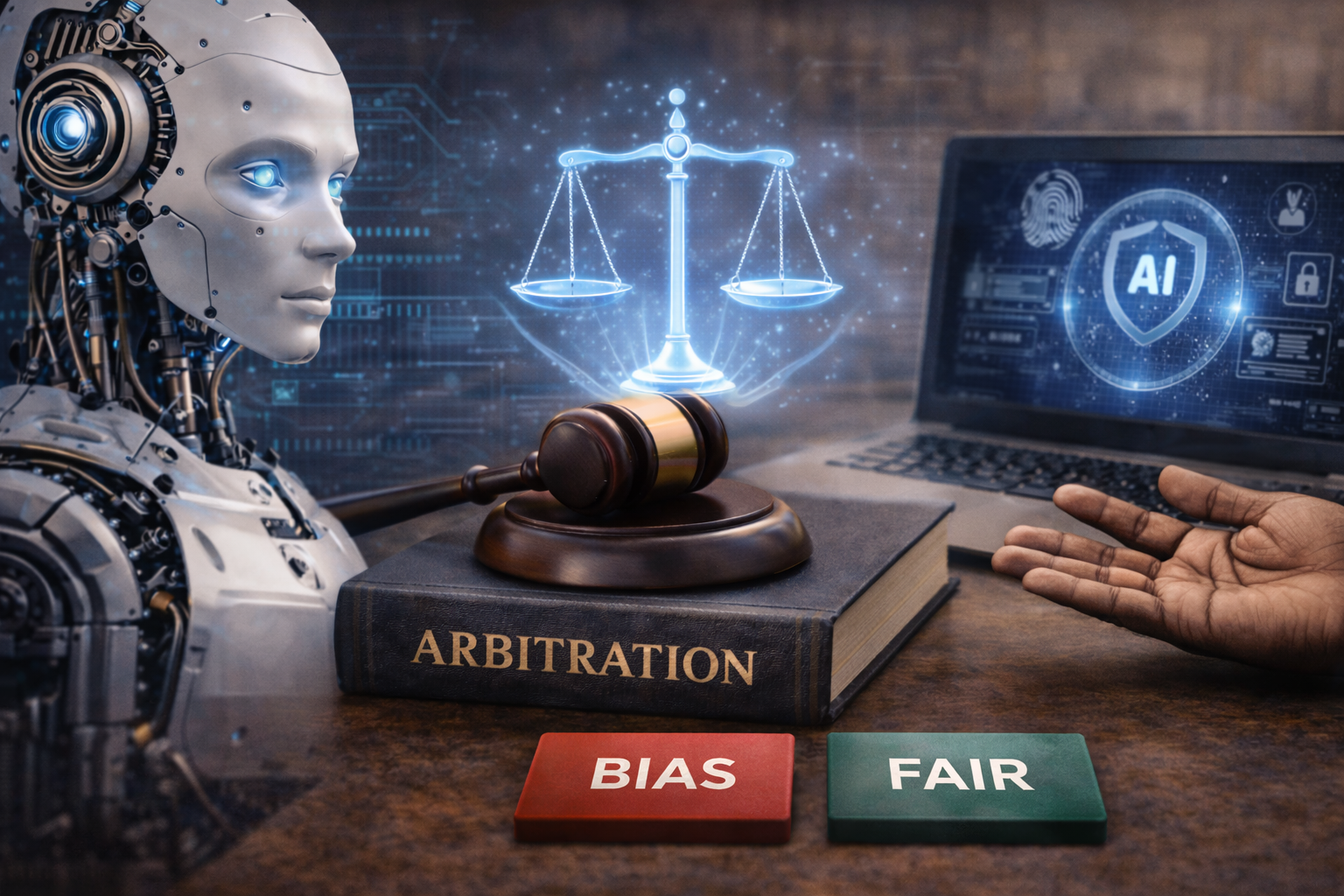
The Algorithmic Arbiters: Addressing Bias and Redress in Digital Lending
~Sura Anjana Srimayi
INTRODUCTION
In the rapidly evolving landscape of Indian and global fintech, the traditional bank manager has been replaced by the invisible hand of the Machine Learning (ML) algorithm. Digital lending platforms, processing thousands of applications in milliseconds, rely on automated credit scoring to determine who gains access to capital and who remains excluded. While this transition promises unparalleled efficiency and financial inclusion, it simultaneously introduces a structural challenge: the risk of "algorithmic bias." As fintechs incorporate "alternative data", ranging from smartphone usage patterns and social media behavior to utility payment histories, into their risk assessments, we face an urgent legal and economic mandate to ensure that these digital gatekeepers do not replicate historical inequalities under the guise of technological neutrality.
I. The Economic Paradox: Inclusion vs. Exclusion
The integration of alternative data is ostensibly designed to help "thin-file" individuals, those without traditional credit histories, enter the formal financial system. However, the economic risk lies in the creation of "exclusionary loops."
If an ML model learns that a specific social media engagement pattern or geographic location correlates with lower repayment capacity, it may inadvertently penalize entire demographic segments based on proxies for caste, gender, or socio-economic background. When the algorithm optimizes solely for risk, it may systematically deny credit to underserved populations, not because they are inherently risky, but because their digital footprint does not align with a model trained on historically privileged datasets. This results in a feedback loop: those excluded are unable to build the financial history required to ever satisfy the model, effectively creating a permanent class of the "unbankable."
II. The Legal Challenge: Fair Lending and the Right to Explanation
In the digital lending sphere, the legal burden has shifted from "non-discrimination" to "explainable decision-making." Traditional fair-lending mandates, such as those embedded in India’s Consumer Protection Act (CPA), 2019, and global equivalents like the US Equal Credit Opportunity Act (ECOA), now intersect with modern data privacy and AI governance standards.
1. The Requirement of "Explainability"
The most significant legal hurdle for fintechs is the "black box" problem. When an AI denies a loan, the law increasingly demands that the decision be "explainable." An auditable rationale must identify the specific, legitimate factors—such as income-to-debt ratio or repayment history—that led to the rejection. If a firm cannot explain why a user was denied credit, it faces potential litigation for "arbitrary decision-making." As legal frameworks like the EU’s AI Act set global precedents, the requirement for human-in-the-loop oversight for high-risk credit decisions is becoming the industry standard.
2. Algorithmic Auditing
Legal frameworks are beginning to treat algorithms as financial products that must be "audited" for safety and bias before they are deployed. Regulators are now pressuring firms to prove that their models do not produce disparate impacts. This requires lawyers and data scientists to collaborate on "model hygiene":
- Bias Testing: Running the model against protected demographic variables to ensure the rejection rates do not disproportionately affect specific groups.
- Data Minimization: Ensuring that the "alternative data" used is strictly relevant to creditworthiness, stripping away extraneous variables that provide no predictive value but may introduce bias.
III. Building a Pathway to Redress
The legal right to dispute an algorithmic decision is the final frontier of consumer protection. A digital lending platform cannot simply point to the "code" as an excuse for an unfair denial. Under current guidelines, a consumer has a right to:
- Notice of Adverse Action: A clear notification explaining that the denial was based on automated scoring.
- Right to Appeal: A clear, accessible pathway to contest the data points used in the assessment. If a consumer believes their digital profile was inaccurate, for example, if social media behavior was misinterpreted, they must be allowed to provide evidence to the contrary.
- Human Review: For high-stakes denials, legal frameworks are increasingly suggesting that an automated system’s decision should be subject to a secondary review by a qualified human underwriter if the consumer initiates a dispute.
IV. Navigating the Future: Legal Insights for Fintechs
For startups operating in this space, the legal risk is no longer limited to data breaches; it is now centered on the potential for "algorithmic discrimination." To mitigate these risks, firms must adopt a "legal-by-design" approach:
- Documentation as Defense: Maintaining rigorous documentation of model training data and the rationale behind feature selection. This is the only defense in the event of a regulatory investigation regarding bias.
- Transparency Reports: Periodically publishing the platform's commitment to fair lending and the steps taken to mitigate bias in credit scoring.
- Regulatory Sandboxes: Engaging with regulators early to test AI models in controlled environments, ensuring that the innovation meets consumer protection mandates before wide-scale deployment.
CONCLUSION
The move toward algorithmic credit scoring is a double-edged sword. It has the potential to democratize finance, but it also carries the risk of institutionalizing bias at a scale that human lenders could never achieve. As we look to the future of digital lending, the primary legal and economic challenge is to ensure that "efficiency" does not come at the cost of "fairness."
The pathway to a truly inclusive digital economy requires a commitment to Algorithmic Accountability. By ensuring that credit scoring models are transparent, explainable, and regularly audited, fintechs can protect themselves from legal liability while fostering a system that grants credit based on merit rather than proxy-driven prejudice. True financial innovation is not just about the sophistication of the algorithm; it is about the fairness of the outcome.
Disclaimer
Every effort has been made to ensure accuracy in this material. However, inadvertent errors or omissions may occur. Any discrepancies brought to the author’s notice will be rectified in subsequent editions. The author shall not be liable for any direct, indirect, incidental, or consequential damages arising from the use of this material. This article is based on various sources including statutory enactments, judicial decisions, academic research papers, professional journals, and publicly available legal materials.
~Sura Anjana Srimayi