
Forget Password

View News
Legal Strategies to Stay Relevant in the Age of Artificial Intelligence: The Rise of the Centaur Lawyer
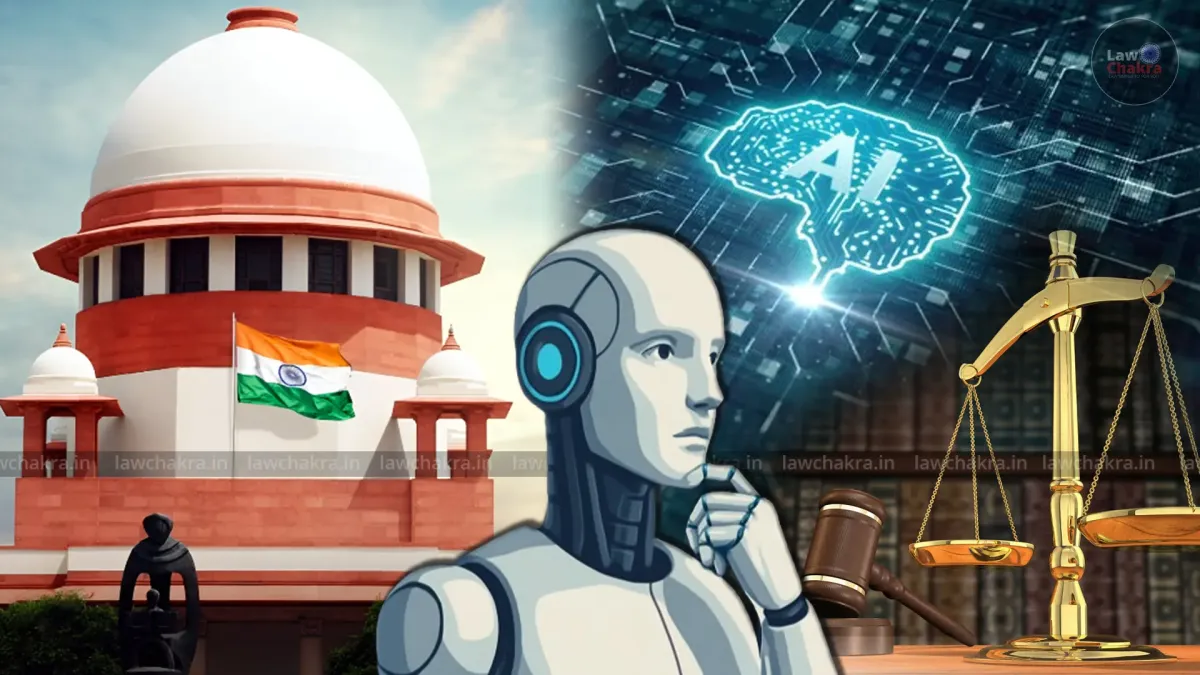
Legal Strategies to Stay Relevant in the Age of Artificial Intelligence: The Rise of the Centaur Lawyer
By Sura Anjana Srimayi
Introduction
Artificial Intelligence has emerged as one of the most transformative technological developments of the twenty-first century. Its influence has extended beyond manufacturing, healthcare, and finance to the legal profession, traditionally regarded as a domain requiring exclusively human judgment and expertise. Legal practitioners across the world increasingly rely upon AI-powered tools for legal research, contract review, compliance monitoring, predictive analytics, and document drafting. In India, where the legal system is characterized by a vast body of legislation, extensive judicial precedents, and a significant pendency of cases, technology has become an indispensable component of modern legal practice.
Despite widespread concerns regarding the replacement of lawyers by machines, such apprehensions are largely misplaced. Artificial Intelligence is better understood as a powerful assistant rather than a substitute for legal professionals. The contemporary lawyer must therefore shift focus from competing with AI to mastering its use. The legal profession of the future will reward those who can effectively combine technological proficiency with legal acumen. Consequently, the objective is not to bypass AI but to remain professionally relevant in an era where intelligent systems have become an integral part of legal work.
The Transformation of Legal Practice in the AI Era
Legal practice has undergone a remarkable transformation over the last decade. Traditionally, lawyers spent substantial amounts of time conducting research in physical libraries, reviewing case reporters, and manually drafting legal documents. The introduction of legal databases significantly improved access to legal information, but Artificial Intelligence has accelerated this evolution by enabling automated analysis of legal materials.
Modern AI systems can summarize lengthy judgments, identify relevant precedents, draft contracts, review compliance requirements, and generate preliminary legal opinions within seconds. These developments have fundamentally altered client expectations. Clients increasingly demand faster turnaround times, cost-effective services, and technologically enabled solutions. Consequently, the lawyer's value no longer lies merely in possessing information but in exercising judgment regarding the interpretation and application of that information.
While technological advancements have enhanced efficiency, they have also introduced new professional responsibilities. Lawyers must understand both the capabilities and limitations of AI systems. Blind reliance on automated outputs may lead to inaccurate legal conclusions, professional negligence, and ethical violations. Therefore, technological competence is becoming as essential as legal knowledge itself.
Why Specialized Legal AI May Be More Valuable Than General Artificial Intelligence
Many law students and young practitioners assume that larger and more sophisticated AI models necessarily produce better legal outcomes. However, legal practice often requires precision rather than general intelligence. A specialized legal AI model trained on legal datasets may therefore outperform a larger general-purpose model in legal contexts.
One of the primary concerns in legal practice is client confidentiality. Lawyers routinely handle sensitive personal, financial, and commercial information. Uploading confidential documents to public cloud-based AI systems may create risks relating to data privacy and professional ethics. Smaller legal language models operating in controlled environments provide greater security and allow practitioners to maintain confidentiality obligations more effectively.
Specialized legal models also offer advantages in terms of contextual accuracy. Generic AI systems are trained on a broad range of internet content and may inadvertently mix legal principles from different jurisdictions. By contrast, legal-specific models trained on Indian statutes, judicial precedents, regulatory notifications, and governmental publications are better positioned to provide legally relevant outputs. The focus should therefore be on selecting the most appropriate technological tool rather than the largest available model.
Navigating the Indian Case Law Ecosystem
One of the greatest challenges facing Indian legal professionals is the sheer volume of legal information. Every year, thousands of judgments are delivered by the Supreme Court, various High Courts, tribunals, and quasi-judicial authorities. The abundance of legal material creates a paradox whereby information is readily available but locating the most relevant authority remains difficult.
Traditional keyword-based research methods frequently generate an overwhelming number of results. Lawyers often spend considerable time filtering irrelevant cases before identifying a useful precedent. Artificial Intelligence, particularly Retrieval-Augmented Generation (RAG), offers a solution to this challenge.
Retrieval-Augmented Generation combines document retrieval mechanisms with generative AI capabilities. Rather than relying solely on pre-trained knowledge, a RAG system first retrieves relevant legal documents and subsequently generates responses based upon those documents. This approach reduces the risk of hallucination and improves factual reliability.
A lawyer employing RAG-based research may retrieve judgments from official court databases and create a searchable repository of precedents. Instead of conducting a conventional keyword search, the lawyer may formulate contextual queries describing specific factual situations. Such semantic searches enable the identification of legally relevant judgments even when the precise keywords do not appear in the text. As legal databases continue to expand, semantic research techniques are likely to become increasingly important in legal practice.
The Human Elements That Artificial Intelligence Cannot Replace
Although AI systems have demonstrated impressive capabilities, several essential aspects of legal practice remain fundamentally human. The most significant among these are emotional intelligence, strategic judgment, and creative legal reasoning.
Client counselling illustrates the limitations of artificial intelligence particularly well. Individuals typically seek legal assistance during periods of uncertainty, anxiety, or emotional distress. Whether dealing with matrimonial disputes, criminal allegations, insolvency proceedings, or commercial conflicts, clients often require reassurance and guidance in addition to legal advice. While an AI system may estimate the probability of success in litigation, it cannot genuinely empathize with a grieving family member, a distressed entrepreneur, or an individual facing reputational harm. The trust-based relationship between lawyer and client therefore remains beyond the reach of automation.
Similarly, the development of innovative legal theories requires creativity that cannot easily be replicated by machines. AI systems are inherently dependent upon historical patterns and existing data. Landmark legal doctrines, however, frequently emerge from challenges to established assumptions. Constitutional developments such as the Basic Structure Doctrine, the expansion of environmental jurisprudence, and the recognition of privacy as a fundamental right demonstrate the transformative role of human imagination in shaping legal evolution. While AI may assist in analysing precedent, it remains the lawyer who conceptualizes new legal arguments capable of influencing future jurisprudence.
Building a Future-Proof Legal Skill Set
The legal profession is undergoing a structural transformation that requires lawyers to acquire skills extending beyond conventional legal education. Moot court participation, internships, and academic achievements continue to be important indicators of competence, but they are no longer sufficient to distinguish candidates in a technology-driven legal marketplace.
One emerging area of importance is prompt engineering, which refers to the ability to communicate effectively with AI systems. The quality of an AI-generated response depends substantially upon the quality of the instructions provided. Lawyers who can formulate precise and contextually rich prompts are likely to obtain more accurate research outputs and drafting assistance than those who interact with AI in a casual manner.
Data protection and digital governance have also become critical areas of legal practice. The increasing digitization of economic activity has generated complex legal issues relating to personal data, cybersecurity, consent management, and cross-border data transfers. Knowledge of the Digital Personal Data Protection Act and associated regulatory frameworks is therefore becoming increasingly valuable for legal professionals.
Another significant development is the emergence of computational law. The growing use of blockchain technology, smart contracts, and automated compliance systems has created a need for lawyers who understand both legal principles and technological architecture. Although lawyers are not expected to become software engineers, familiarity with basic programming concepts can significantly enhance their ability to advise clients operating in technology-intensive industries.
The significance of these emerging competencies can be summarized as follows:
| Emerging Skill | Relevance to Modern Legal Practice |
|---|---|
| Prompt Engineering | Improves interaction with AI-based legal tools and enhances research accuracy |
| Data Privacy and DPDP Compliance | Essential for advising clients on digital governance and regulatory compliance |
| Computational Law | Facilitates understanding of smart contracts and automated legal systems |
| Legal Analytics | Assists in risk assessment, litigation strategy, and predictive analysis |
| Technology-Assisted Due Diligence | Enhances efficiency in corporate transactions and compliance reviews |
Ethical Responsibilities in the Age of Artificial Intelligence
The increasing adoption of AI does not diminish professional responsibility; rather, it heightens it. Several jurisdictions have already witnessed instances where lawyers submitted court filings containing fictitious case citations generated by AI systems. Such incidents demonstrate the dangers of relying on automated outputs without verification.
The first and most fundamental principle of responsible AI usage is verification. Every citation, statutory reference, and legal proposition generated by an AI system must be independently confirmed through authoritative sources. The responsibility for accuracy always remains with the lawyer.
Transparency constitutes another important ethical consideration. As regulatory frameworks evolve, legal practitioners may increasingly be required to disclose the extent to which AI tools contributed to the preparation of legal documents. Such disclosure promotes accountability and preserves public confidence in the legal system.
The protection of confidential information is equally important. Lawyers must carefully evaluate whether client documents can be processed using third-party AI platforms without compromising confidentiality obligations. In many cases, the safest approach may involve the use of secure or locally deployed systems.
Ultimately, AI should be regarded as a decision-support tool rather than a decision-maker. Professional judgment cannot be delegated to algorithms, irrespective of their sophistication.
The Emergence of the Centaur Lawyer
The legal profession is moving towards a hybrid model in which human expertise and artificial intelligence complement one another. This model is often described as the “Centaur Lawyer,” borrowing from the mythical creature that combines human intelligence with exceptional physical capabilities.
The Centaur Lawyer utilizes AI to perform repetitive and time-consuming tasks such as document review, legal research, and data analysis. The time saved through automation is then invested in strategic thinking, advocacy, negotiation, and client relationship management. In this model, machines provide efficiency while humans provide wisdom.
The distinction between human and machine capabilities may be illustrated as follows:
| Human Lawyer | Artificial Intelligence |
| Exercises judgment | Processes large datasets rapidly |
| Demonstrates empathy | Identifies patterns efficiently |
| Develops innovative legal theories | Retrieves information quickly |
| Upholds ethical responsibilities | Automates repetitive tasks |
| Persuades courts and clients | Enhances research and drafting speed |
The future of legal practice lies not in choosing between human expertise and machine intelligence but in integrating both effectively.
Conclusion
Artificial Intelligence is reshaping legal practice in profound ways. Nevertheless, it does not signal the end of the legal profession. Rather, it represents a transition towards a more technologically sophisticated model of legal service delivery. Lawyers who ignore technological developments may find themselves at a competitive disadvantage, while those who embrace AI responsibly will be better positioned to serve clients effectively.
The objective is not to bypass Artificial Intelligence but to harness its capabilities while preserving the uniquely human qualities that define the legal profession. Legal knowledge, ethical judgment, creativity, advocacy, and empathy remain indispensable attributes of a successful lawyer. By combining these attributes with technological competence, legal professionals can thrive in an increasingly digital world.
The lawyer of the future will not be replaced by Artificial Intelligence. Instead, the lawyer who understands and effectively utilizes Artificial Intelligence will replace the lawyer who does not.
Disclaimer
Every effort has been made to ensure accuracy in this material. However, inadvertent errors or omissions may occur. Any discrepancies brought to the author’s notice will be rectified in subsequent editions. The author shall not be liable for any direct, indirect, incidental, or consequential damages arising from the use of this material. This article is based on various sources including statutory enactments, judicial decisions, academic research papers, professional journals, and publicly available legal materials.